Travel Guide
Kusatsu Onsen 3-Day Itinerary: Hot Springs, Volcanoes & Mountain Town Magic
Want the editable version of this route?
Open the Instaboard template and adapt stops, timing, and notes to fit your trip.
Hey, so there is a mountain town in Japan where five thousand liters of near-boiling sulfur water pour through wooden channels every single minute, right in the middle of the street. The whole place smells like eggs and steam.
Kusatsu Onsen keeps winning Japan's number-one hot spring ranking, and most visitors from overseas have never heard of it. That is a shame, because three days here will change how you think about the entire country.
Kusatsu works year-round: summer hiking on the volcano, winter skiing above the town, spring and autumn for mild days and colored foliage along the thermal streams.
Day 1
Day one is about understanding why this town exists. You start at the steaming wooden chutes that feed every bathhouse, watch people cool scalding water with wooden paddles, then get in the water yourself.
Yubatake
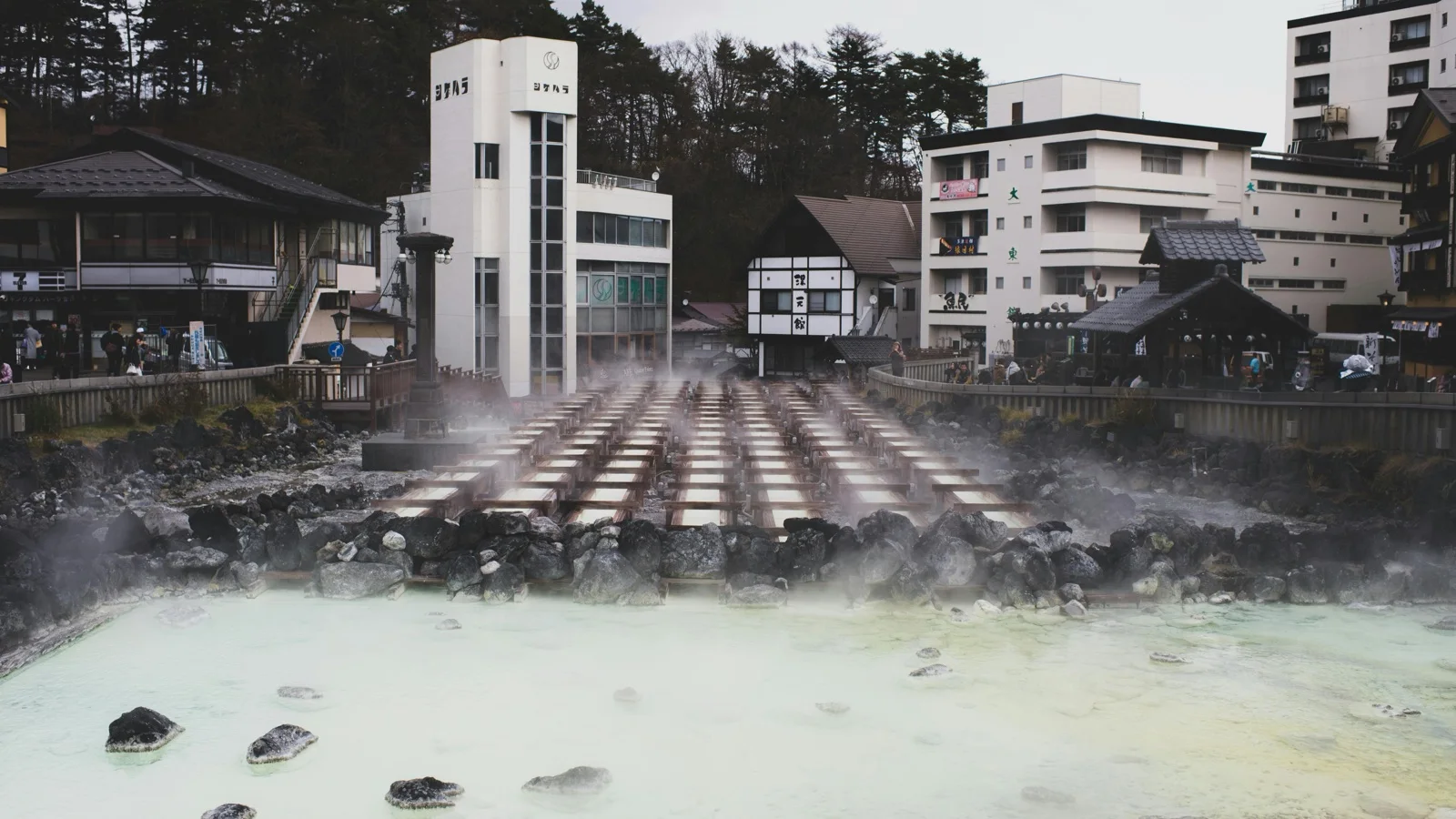
The Yubatake is a wooden chute system sitting dead center in town, channeling seventy-degree sulfur water to every bathhouse and ryokan around it. Five thousand liters a minute flow through those troughs. Kusatsu has Japan's largest natural hot spring output, and this is the distribution hub that makes the whole town possible.
The sulfur sediment that collects in the channels gets scraped out and sold as bath salts called yunohana, which is a charmingly practical side hustle. Grab the free foot bath right next to the troughs. The water is genuinely hot, and it is the quickest way to understand what Kusatsu is about before you commit to a full soak.
Tip: Visit at sunset when the steam is dramatically lit against the evening sky for the most spectacular photos.
Kusatsu Onsen Netsunoyu
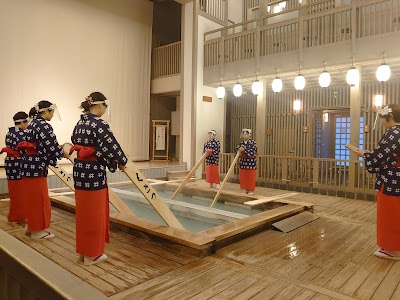
Right next to the Yubatake is the Netsunoyu theater, where costumed performers stand over nearly boiling water and stir it with long wooden paddles in time with folk songs. This is not a show invented for tourists. Before mechanical cooling, this was genuinely how Kusatsu made its water safe to bathe in without diluting the minerals.
The combination of rhythmic splashing, singing in a warm wooden hall, and thick steam rising from the trough is something you genuinely will not find anywhere else. Book ahead if you can, especially on weekends. Show up twenty minutes early because the theater is small and back-row seats partially block the view.
Tip: Six daily shows run from morning to evening. Arrive 20 minutes early for the best seats in the small theater.
Ōtaki no Yu
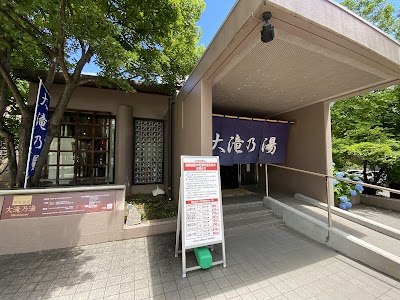
Otaki no Yu is where you actually get in the water. It is a public bathhouse with tiered wooden tubs that climb from comfortably warm to what can only be called character-building. The Awaseyu pools run from about thirty-eight to forty-six degrees, all fed by undiluted acidic sulfur water from the Nikawa source, with no recirculation and no dilution.
The water has a faintly milky quality, the wooden tubs creak, and your skin will feel noticeably different afterward, smoother or at least very exfoliated. Leave your jewelry behind, especially silver. The acid will tarnish it fast. If you have sensitive skin, keep the first soak to about ten minutes.
Tip: Bring cash for the entry fee, as electronic payment is not always accepted at this traditional bathhouse.
Day 2
Day two goes from the valley floor to the volcano above it. You will walk through geothermal meadows in the morning, then take a bus up to an active crater lake in the afternoon.
Sainokawara Park
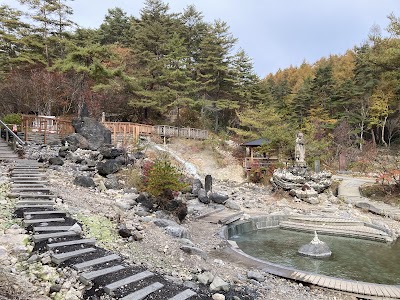
Ten minutes from the Yubatake, Sainokawara Park opens into a riverside valley where hot water literally bubbles up through the earth and runs in warm streams toward a cold mountain river. The name means roughly "riverbed of the afterlife," and there are small Jizo statues tucked alongside the thermal streams. This landscape has carried spiritual weight for centuries.
Walk the upper trails past the bubbling sources and a hot waterfall with a free foot bath before heading to the rotenburo, one of Japan's largest outdoor baths, seating about a hundred people per side. Arrive when the bathhouse opens and you will have the outdoor pool nearly to yourself. The trails are quiet and the early-morning light through the steam is worth the early start.
Tip: Arrive when the bathhouse opens for the quietest experience. The large outdoor rotenburo bath seats around 100 bathers per side.
Mount Kusatsu-Shirane
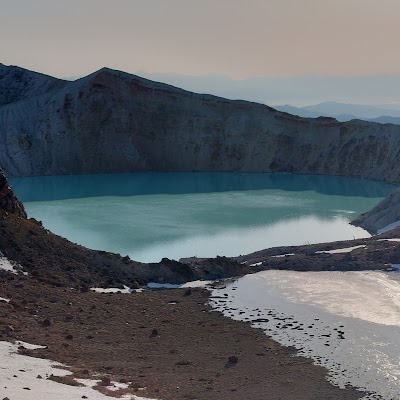
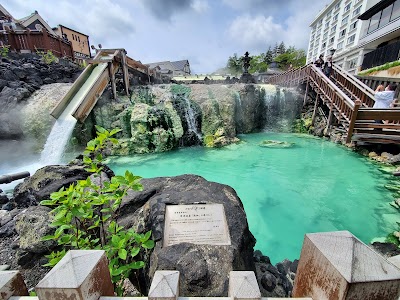
Everything you have been soaking in comes from Mount Kusatsu-Shirane, a twenty-one-hundred-meter active volcano whose crater lake, Yugama, is an almost synthetic emerald green because the water is pH one. The lake is ringed by bare volcanic rock with yellow sulfur rafts floating on the surface. It looks more like another planet than anything you would expect in central Japan.
This is a genuinely active volcano. It erupted as recently as 2018, and alert levels fluctuate, so check the Japan Meteorological Agency status the morning you go because crater access closes at level two. Bring warm layers regardless of season. Two thousand meters with wind is always cold. Catch the JB Bus from the bus terminal on its limited schedule.
Tip: Check the Japan Meteorological Agency volcanic alert level before heading up, as crater access closes at level two. Dress in warm layers even in summer.
Shirahata Hot Spring
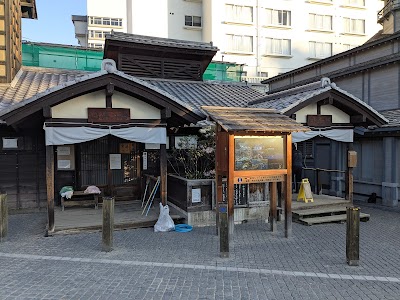
Shirahata-no-Yu is the largest public bathhouse in Kusatsu, and it costs exactly nothing. The same sulfur water people pay thousands for at ryokan, in a simple tiled pool, free. Kusatsu has kept free community bathhouses running for centuries because the founding idea is that the hot water belongs to everyone, not just paying guests.
Come in the evening after your day on the mountain. Weekday nights are quieter, the crowd shifts to locals doing their regular routine, and the heat hits differently when you are genuinely tired. The water arrives straight from the source with almost no cooling, so test it with your hand first. The pools are small, maybe two to four people, and the facilities are as no-frills as it gets.
Tip: Visit on a weekday evening for a quieter soak. The water arrives nearly uncooled from the source, so test it with your hand before getting in.
Day 3
Day three shifts from soaking to altitude. A morning on the mountain, whether that means skiing or riding a gondola, then stone-milled soba for lunch and one final bath overlooking where you started.
Kusatsu Onsen Ski Resort
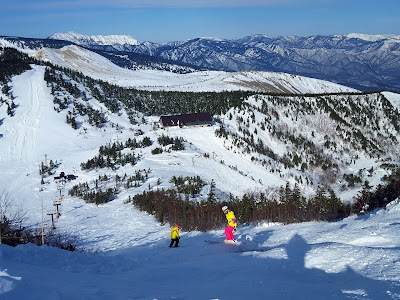
The Kusatsu Ski Resort on Mt. Tengu sits on a piece of sports history. This was home to one of Japan's very first ski lifts, back when the country was just figuring out the sport. If you are here outside winter, the Pulse Gondola Tengu still runs and gives you panoramic views across volcanic ridgelines with the steaming town visible far below.
Warmer months add zip-lining and mountain carting, so the area earns its keep in every season, not just when there is snow on the ground. Go early for the clearest views before afternoon clouds roll in, and bring a layer. The temperature drop at the top catches people off guard even in summer.
Tip: Prebook your gondola ticket online to skip the weekend line at the gate.
Mikuniya Soba
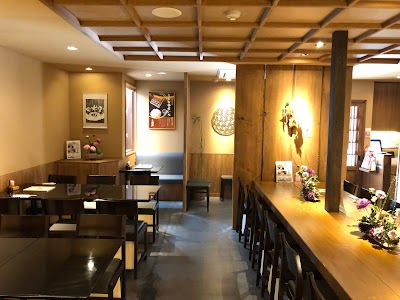
Three minutes from the Yubatake, Mikuniya is stone-grinding its own buckwheat the old way, slower, more aromatic, and increasingly rare in a country where most shops have switched to machines. The signature Mikuni Tsukejiru Soba gives you four different dipping broths alongside two and a half servings of noodles, which turns a simple lunch into a proper tasting.
They also do seared Akagi Wagyu meat sushi out of their in-house bistro, which is not something most soba shops bother with. Add it as a side if it is available. Arrive before noon, because Mikuniya is small and popular and the lunch queue builds fast. Coming at eleven gives you the calmest shot at a table.
Tip: Arrive before noon to avoid the lunch queue. Try the signature Mikuni Tsukejiru Soba with four dipping broth choices.
Gozanoyu
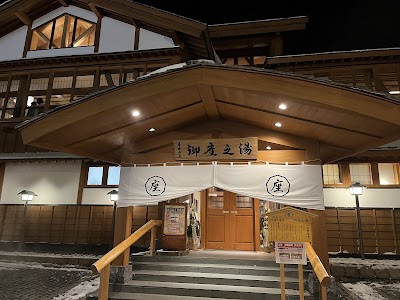
Gozanoyu is a two-story cedar bathhouse right next to the Yubatake, built in 2013 but designed to look like it has been there for a century. Two baths, one stone and one wooden, are fed by different thermal sources from the Yubatake. The genders switch daily so you might get either material depending on when you visit.
The second-floor tatami room overlooks the steaming water field below, and it is one of the few quiet public spaces in town where you can just sit and take it all in. This is the last soak of the trip, right where you started three days ago, and somehow the steam and the sulfur smell hit different when you actually understand what is under your feet.
Tip: Cash payment is preferred at the entry gate. The bath stays open until late evening, so save it for your final soak of the trip.
What to book ahead
- Reserve ryokan or hotel in Kusatsu Onsen (4–8 weeks ahead) - Weekends fill up fast, especially during ski season and autumn foliage.
- Book Netsunoyu yumomi performance tickets (1–2 weeks ahead) - Six daily shows but front seats sell out; purchase at the venue or online.
- Check Mt. Shirane bus schedule (1 day ahead) - Bus from Kusatsu to Mt. Shirane runs on limited schedule; confirm return times.
- Confirm ski resort gondola operating dates (1 day ahead) - The Pulse Gondola Tengu may close for maintenance between seasons.
What to pack
Essentials
- Modest towel set - Required for onsen bathing; small modesty towels are used when walking between pools.
- Slip-on shoes - You'll remove shoes frequently at bathhouses, restaurants, and ryokans.
- Warm layers - Mountain elevation (1,200–2,160 m) means temperatures drop sharply even in summer.
- Cash in yen - Many bathhouses and smaller eateries do not accept credit cards.
Nice to have
- Waterproof daypack - Useful for carrying towel and change of clothes on the Sainokawara Park trail.
- Sunscreen and hat - High-altitude UV exposure on Mt. Shirane and ski resort gondola rides.
- Hiking boots - Recommended for the Mt. Kusatsu-Shirane trail; volcanic terrain is uneven.
Final take
Three days in Kusatsu and you will never look at a hot spring the same way. You have seen where the water comes from, cooled it yourself, soaked in it for free, and stood on the volcano that makes it all possible.
Plan this trip
Turn this guide into an editable trip plan
Open the route in Instaboard, adjust the stops, and share the itinerary with your travel group.